
Book Guide
Atlas Shrugged
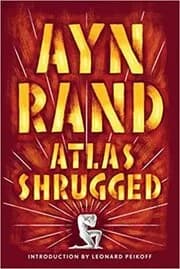
In "Atlas Shrugged," Ayn Rand crafts a monumental narrative exploring the tension between individualism and collectivism through the lens of a dystopian America. The story centers on Dagny Taggart, a fervent railroad executive, and her struggle to maintain her business amidst an increasingly oppressive government. As society collapses under the weight of mediocrity and intervention, Rand poses provocative questions about the nature of freedom and the role of the individual. One recommender notes, “It’s a book that forces you to challenge your beliefs about ethics and economics,” highlighting the philosophical undercurrents that permeate the plot. As the mysterious figure of John Galt emerges, representing the power of the mind and the refusal to yield to tyranny, readers are urged to consider, “What would happen if the best among us decided to stop?” This central dilemma drives the novel forward, illustrating the consequences of a world that forsakes the value of human ingenuity and ambition. The intricate web of character arcs serves not only as a narrative vehicle but as a profound commentary on the potential future of humanity. Ultimately, "Atlas Shrugged" stands as a challenge to accept or reject the pivotal principles of capitalism, making it a thought-provoking read that resonates profoundly in today's socio-political climate.
Why It Matters
Why readers land on this book
In "Atlas Shrugged," Ayn Rand crafts a monumental narrative exploring the tension between individualism and collectivism through the lens of a dystopian America. The story centers on Dagny Taggart, a fervent railroad executive, and her struggle to maintain her business amidst an increasingly oppressive government. As society collapses under the weight of mediocrity and intervention, Rand poses provocative questions about the nature of freedom and the role of the individual. One recommender notes, “It’s a book that forces you to challenge your beliefs about ethics and economics,” highlighting the philosophical undercurrents that permeate the plot. As the mysterious figure of John Galt emerges, representing the power of the mind and the refusal to yield to tyranny, readers are urged to consider, “What would happen if the best among us decided to stop?” This central dilemma drives the novel forward, illustrating the consequences of a world that forsakes the value of human ingenuity and ambition. The intricate web of character arcs serves not only as a narrative vehicle but as a profound commentary on the potential future of humanity. Ultimately, "Atlas Shrugged" stands as a challenge to accept or reject the pivotal principles of capitalism, making it a thought-provoking read that resonates profoundly in today's socio-political climate.
Topics
Recommendation Proof
Who recommends Atlas Shrugged

Highly recommends this book.

Highly recommends this book.

Highly recommends this book.

Highly recommends this book.

Highly recommends this book.

Highly recommends this book.

Highly recommends this book.

Highly recommends this book.

Highly recommends this book.

Highly recommends this book.

Highly recommends this book.

Highly recommends this book.

Highly recommends this book.

Highly recommends this book.

Highly recommends this book.

Highly recommends this book.

Highly recommends this book.

Highly recommends this book.

Highly recommends this book.

Highly recommends this book.
Read Next
Related books worth exploring




Featured in
Curated Lists
Deep Dive
Articles Mentioning This Book

Quick Answers
Atlas Shrugged FAQ
What is Atlas Shrugged about?
Atlas Shrugged by Ayn Rand stands out as a high-interest title with strong recommendation value.
Who recommends Atlas Shrugged?
Atlas Shrugged is highly recommended by Amelia Boone, Austen Allred, and Blake Scholl.
Is Atlas Shrugged part of a series?
Atlas Shrugged is currently treated as a standalone reading destination.
What should I read after Atlas Shrugged?
A good next step after Atlas Shrugged is The Fountainhead, Anthem, We the Living.
When was Atlas Shrugged published?
Atlas Shrugged was published in 1936.