

There is no shortage of "books every entrepreneur should read" lists. The problem with most of them: they're written by journalists or bloggers who haven't built companies. The recommendations feel generic because they are.
This list is different. Every book here was independently recommended by multiple founders, investors, or operators — people who've actually started, funded, or scaled companies — in publicly verifiable sources tracked on GurusReads. We ranked them by total independent recommendation count.
How We Chose These Books
GurusReads tracks book recommendations from verified public sources: podcast interviews, published essays, YouTube appearances, social media posts. Every recommendation on our platform links to the original source. The books below appear most frequently across our network of founders and investors.
The Books
1. Zero to One — Peter Thiel
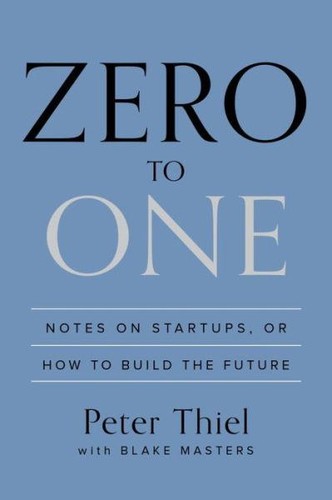
The contrarian's manifesto for startups. Thiel's thesis: competition is for losers. Real value comes from creating something new — going from 0 to 1 — not copying what already exists.
His framework for monopoly vs. commodity businesses has become foundational vocabulary for anyone in tech. Chapters on secrets ("what important truth do very few people agree with you on?") and the power law of startup investing are required reading.
Key insight: Every great business is built on a secret — something true that most people don't believe yet.
Recommended by:
Elon Musk • Mark Zuckerberg • Sam Altman • Tim Ferriss • Nassim Taleb • Marc Andreessen • Eric Weinstein • Chris Dixon • Ben Horowitz • Luis von Ahn
2. The Hard Thing About Hard Things — Ben Horowitz

Already on the leadership list, it belongs here too. Horowitz writes about the loneliness of founding — the weight of decisions no one has a framework for. Required reading before you start a company, not after you're in the middle of one.
Recommended by:
Mark Zuckerberg • Tim Ferriss • Marc Andreessen • Peter Attia • Dustin Moskovitz • Fred Wilson • Blake Scholl • Keith Rabois • Drew Houston • Kathryn Minshew
3. Shoe Dog — Phil Knight

The best founder memoir ever written. Nike's origin story told with brutal honesty — the near-bankruptcy moments, the manufacturing disasters, the almost-lost bank credit. Knight doesn't pretend it was a plan; it was a series of desperate improvisations that happened to work.
What makes it useful: Knight shows that every successful company has moments where it should have died. The survivorship bias of startup success hides how close to the edge everyone actually runs.
Key insight: Persistence in the face of near-certain failure is not inspiring in the moment. It's just what building something requires.
Recommended by:
Bill Gates • Warren Buffett • Austen Allred • Ben Thompson • Bill Gurley • Blake Randall • Brian Armstrong • Alexis Ohanian • Kathryn Minshew • Patrick O'Shaughnessy
4. The Lean Startup — Eric Ries
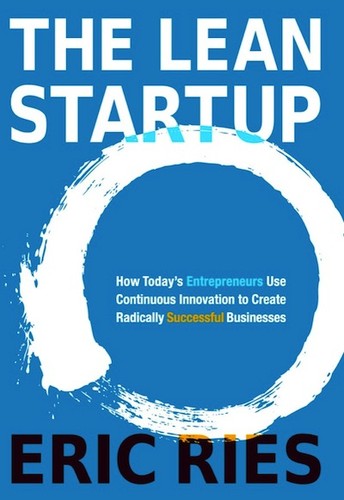
The book that introduced Build-Measure-Learn to the startup vocabulary. Ries's core argument: startups fail not because they can't execute, but because they execute the wrong thing. The MVP framework and pivot/persevere decision process have become standard operating procedure for product teams.
Recommended by:
Bill Gates • Mark Cuban • Marc Andreessen • Dustin Moskovitz • Jason Calacanis • Kevin Systrom • Marty Cagan • Patrick Bet-David • Raoul Pal • Sheryl Sandberg
5. Thinking, Fast and Slow — Daniel Kahneman

Every founder is in the business of making decisions under uncertainty. Kahneman's framework — System 1 (fast, intuitive, error-prone) vs. System 2 (slow, deliberate, rational) — gives you a vocabulary for diagnosing why your thinking goes wrong.
Cognitive biases covered include: anchoring, availability heuristic, planning fallacy, and overconfidence. Every one of these kills startups.
Recommended by:
Bill Gates • Sam Altman • Ray Dalio • Tim Ferriss • Naval Ravikant • Nassim Taleb • Marc Andreessen • Mark Manson • Michiko Kakutani • Preston Pysh
6. The Innovator's Dilemma — Clayton Christensen

Why great companies fail when new technologies emerge. Christensen's insight: it's not incompetence or laziness that causes incumbents to be disrupted — it's rational behavior at every level of the organization. They optimize for their current best customers, who don't want the disruptive product.
Recommended by:
Steve Jobs • Mark Cuban • Marc Andreessen • Blake Scholl • Caterina Fake • Chris Dixon • Drew Houston • Ev Williams • Guy Kawasaki • Jeff Bezos
7. Good to Great — Jim Collins

Collins's 5-year research project identified what separates companies that made a sustained leap to greatness from competitors that didn't. Key concepts: Level 5 Leadership, the Hedgehog Concept, and the Flywheel.
Recommended by:
Brian Armstrong • Daniel Ek • Dave Ramsey • Ev Williams • Frank Blake • Jason Calacanis • Jeff Bezos • John Doerr • Max Levchin • Michael Hyatt
8. The E-Myth Revisited — Michael Gerber

Most small businesses fail because the founder is technically skilled at the work but has no framework for building a business around the work. Gerber's distinction between the Technician, Manager, and Entrepreneur mindsets is the most useful framework for early-stage founders.
Recommended by:
Tim Ferriss • Dave Camarillo • Dave Ramsey • Derek Sivers • Michael Sartain • Patrick Bet-David • Tom Bilyeu • Michael Hyatt
9. Crossing the Chasm — Geoffrey Moore

The technology adoption lifecycle and the chasm between Early Adopters and the Early Majority is the most accurate map of why many technically successful startups plateau. Moore's "bowling pin" targeting strategy — win one niche completely before expanding — has influenced go-to-market thinking across the industry.
Recommended by:
Seth Godin • Andrew Ng • Bill Gurley • Changpeng Zhao • Chris Dixon • Aaron Levie • Ev Williams • Guy Kawasaki • Ron Conway • Drew Houston
10. High Growth Handbook — Elad Gil

The operational companion to Zero to One. Gil covers the execution layer: how to hire executives, structure the board, navigate acquisitions, and scale culture. Interviews with founders and operators including Marc Andreessen, Patrick Collison, and Sam Altman make it the most practically dense handbook available.
Recommended by:
Aaron Levie • Alexis Ohanian • Brian Armstrong • Chris Dixon • Kathryn Minshew • Keith Rabois • Max Levchin • Reid Hoffman • Ryan Petersen
11. Principles — Ray Dalio

Dalio's framework for systematic decision-making, built from 40 years of running Bridgewater. The first section — his personal principles — is the most useful for founders: radical transparency, pain + reflection = progress, and believing one's weaknesses more than one's strengths.
Recommended by:
Bill Gates • Lex Fridman • Mark Cuban • Tim Ferriss • Naval Ravikant • Arianna Huffington • Phil Jackson • Caterina Fake • Bryan Johnson • Mark Manson
12. The Mom Test — Rob Fitzpatrick

The shortest and most underrated book on this list. Fitzpatrick's thesis: customer interviews almost always mislead you because people are polite. His framework — ask only about people's past behavior, never about hypothetical future intent — is the most reliable way to validate whether you're building something people actually want.
13. Founders at Work — Jessica Livingston

Oral history of early-stage startups: Apple, Flickr, Gmail, PayPal, Hotmail. The value is seeing how improvised and uncertain every successful origin story actually was.
Recommended by:
Ryan Holiday • Paul Graham • Alexis Ohanian • Ev Williams • Ron Conway
14. Influence — Robert Cialdini

Six principles of persuasion — reciprocity, commitment, social proof, authority, liking, scarcity — with research backing and real-world examples.
Recommended by:
Warren Buffett • Charlie Munger • Naval Ravikant • Paul Graham • James Clear • Mark Manson • Andrew Wilkinson • Neil Strauss • Guy Kawasaki • Michael Hyatt
15. Poor Charlie's Almanack — Charlie Munger

Munger's collected speeches and mental models. The "lattice of mental models" concept — that good thinking requires mental models drawn from multiple disciplines.
Recommended by:
Bill Gates • Warren Buffett • Tim Ferriss • Naval Ravikant • Marc Andreessen • Drew Houston • John Collison • Courtland Allen • Patrick Collison • Ramit Sethi
Where to Start
First book: The Hard Thing About Hard Things — read it before you're in the middle of those hard things.
For product/validation: The Mom Test → The Lean Startup → Crossing the Chasm
For thinking: Thinking, Fast and Slow → Poor Charlie's Almanack → Zero to One
For execution: High Growth Handbook → High Output Management → Good to Great
Explore who recommends each of these books — and their full reading lists — on GurusReads.