
The world of personal finance is terrifyingly loud. For a beginner trying to figure out where to park their first $10,000, the internet offers a paralyzing spectrum of completely contradictory advice. One financial influencer insists on cutting out $5 lattes; another screams that clipping coupons is a poverty mindset and you must leverage debt to buy distressed real estate.
When you strip away the hyperbole and the grifters selling courses, the mechanical truth of building wealth is actually quite boring. The men and women who have built the largest fortunes on the planet don't rely on secret trading algorithms or meme stocks. They rely on asymmetrical risk, compounding interest, and ruthless emotional control.
At GurusReads, we track the verified reading habits of the world's most successful investors, founders, and capital allocators. By scraping thousands of interviews, shareholder letters, and podcast transcripts, we don't have to guess what works. We just look at the data.
The books on this list aren't theoretical. They are the exact texts cited by the likes of Warren Buffett, Bill Ackman, and Marc Benioff as the foundational bedrock of their success. If you want to understand how money actually works—how it flows, how it compounds, and how it is protected—these are the absolute best personal finance and investing books for beginners.
1. The Psychology of Money by Morgan Housel

If you read only a single book on this list, make it this one. Most finance books fail because they treat money like a physics problem—as if it operates according to strict, mathematical laws. Morgan Housel, a former columnist for The Wall Street Journal, argues that money is actually a psychological phenomenon.
Doing well with money has a little to do with how smart you are and a lot to do with how you behave. And behavior is notoriously hard to teach, even to really smart people.
Housel uses 19 short stories to explore the strange ways people think about wealth. For instance, he points out the invisible risk of looking rich: spending money to show people how much money you have is the single fastest way to have less money. True wealth is what you don't see—it's the cars not purchased, the diamonds not bought, and the portfolios left alone to compound for decades.
This framework is lauded by modern finance commentators and veteran investors alike. It is wildly recommended by Ankur Warikoo, Anthony Pompliano, Daniel Pink, and Brad Feld. It proves that the most important metric on a spreadsheet isn't the expected yield, but whether you possess the temperament to sit on your hands when the market inevitably drops 30% in a month.
2. The Intelligent Investor by Benjamin Graham

Warren Buffett picked up a copy of The Intelligent Investor in early 1950 when he was 19 years old. Today, with a net worth hovering around $130 billion, he still considers that moment the single luckiest event of his professional life. He calls it "by far the best book on investing ever written."
Benjamin Graham was Buffett's professor at Columbia University and the father of value investing. This book is a dense, philosophical manual on how to detach your emotional state from the hysterical fluctuations of the stock market.
Graham introduces concepts that are now foundational to modern investing. He creates the allegory of "Mr. Market," an imaginary manic-depressive business partner who shows up every day offering to buy your shares or sell you his. When Mr. Market is euphoric, he quotes absurdly high prices. When he is depressed, he quotes absurdly low prices. Graham's lesson is simple: Mr. Market is there to serve you, not to guide you.
He also drills home the necessity of a "margin of safety"—never buying an asset unless it is trading at a significant discount to its intrinsic value. The book is regularly cited by some of the most prominent hedge fund managers alive, including Jamie Dimon, Bill Ackman, and Peter Mallouk.
3. The Lean Startup by Eric Ries
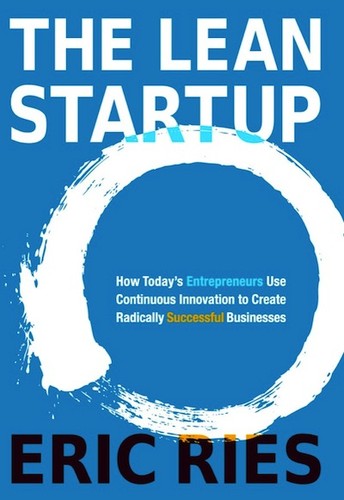
You might wonder what a book about building tech companies is doing on a personal finance list. But in the GurusReads database, The Lean Startup has a staggering 16 independent recommendations, including citations from Bill Gates, Ben Horowitz, and Chris Dixon.
For anyone looking to build wealth through entrepreneurship—which remains the most reliable path to vast fortunes—this book is an essential text on capital allocation and risk management.
Ries teaches how to stop wasting capital on products that nobody wants. He introduces the "Build-Measure-Learn" feedback loop and the concept of the Minimum Viable Product (MVP). In the context of personal finance, it's a brutal reminder of the sunk-cost fallacy. Beginners often burn their entire life savings attempting to perfectly execute an unvalidated business idea. Ries teaches you how to test those ideas with minimal capital risk, preserving your cash runway while iterating toward profitability.
If you are treating your personal finances like a business, understanding how to validate investments and side-hustles cheaply is a mandatory skill.
4. The Most Important Thing by Howard Marks

Howard Marks, co-chairman of Oaktree Capital Management, is legendary on Wall Street. His quarterly memos are religiously devoured by financial elites. The Most Important Thing is a compilation of the best insights drawn from those memos over decades of navigating market cycles.
Warren Buffett famously endorsed Marks, stating: "When I see memos from Howard Marks in my mail, they're the first thing I open and read."
The core of the book revolves around risk management and "second-level thinking." First-level thinking is simplistic and reactive: "It's a good company; let's buy the stock." Second-level thinking is deep and complex: "It's a good company, but everyone thinks it's a great company, and it's not. So the stock is overrated and overpriced; let's sell."
For beginners, Marks destroys the illusion that you can achieve higher returns without taking on disproportionate risk. It is a sobering, necessary read that prevents novice investors from walking into speculative traps during bull markets. Highly recommended by Bill Gurley, Peter Attia, and Lyn Alden.
5. MONEY Master the Game by Tony Robbins

Love him or hate him, Tony Robbins did something incredible with this book: he demanded access to 50 of the world's most reclusive, successful financial minds—titans like Ray Dalio, Paul Tudor Jones, and Carl Icahn—and translated their complex strategies into a 7-step blueprint for the average retail investor.
The book excels precisely because Robbins approaches the subject as a hyper-curious outsider trying to crack a rigged system. He aggressively demystifies complex financial instruments and exposes the predatory fee structures of mutual funds that siphon billions from middle-class retirements.
Robbins strongly advocates for automating investments into low-cost index funds, making it highly accessible for absolute beginners who want actionable steps today. By mimicking the asset allocation strategies (like Dalio's "All Weather Portfolio") of billionaires, retail investors can protect their downside while capturing long-term market growth.
Marc Benioff, Andrew Wilkinson, and Ryan Petersen all point to this book as a surprisingly dense, high-leverage manual for building financial independence.
If you want to escape the noise of TikTok finance gurus and start treating your money with the seriousness it deserves, start with these five books. You can explore more financial wisdom by looking through the reading libraries of the world's most successful investors on GurusReads.